Cabinets Dated but the Kitchen Layout Works? Reface, Refinish, or Replace?
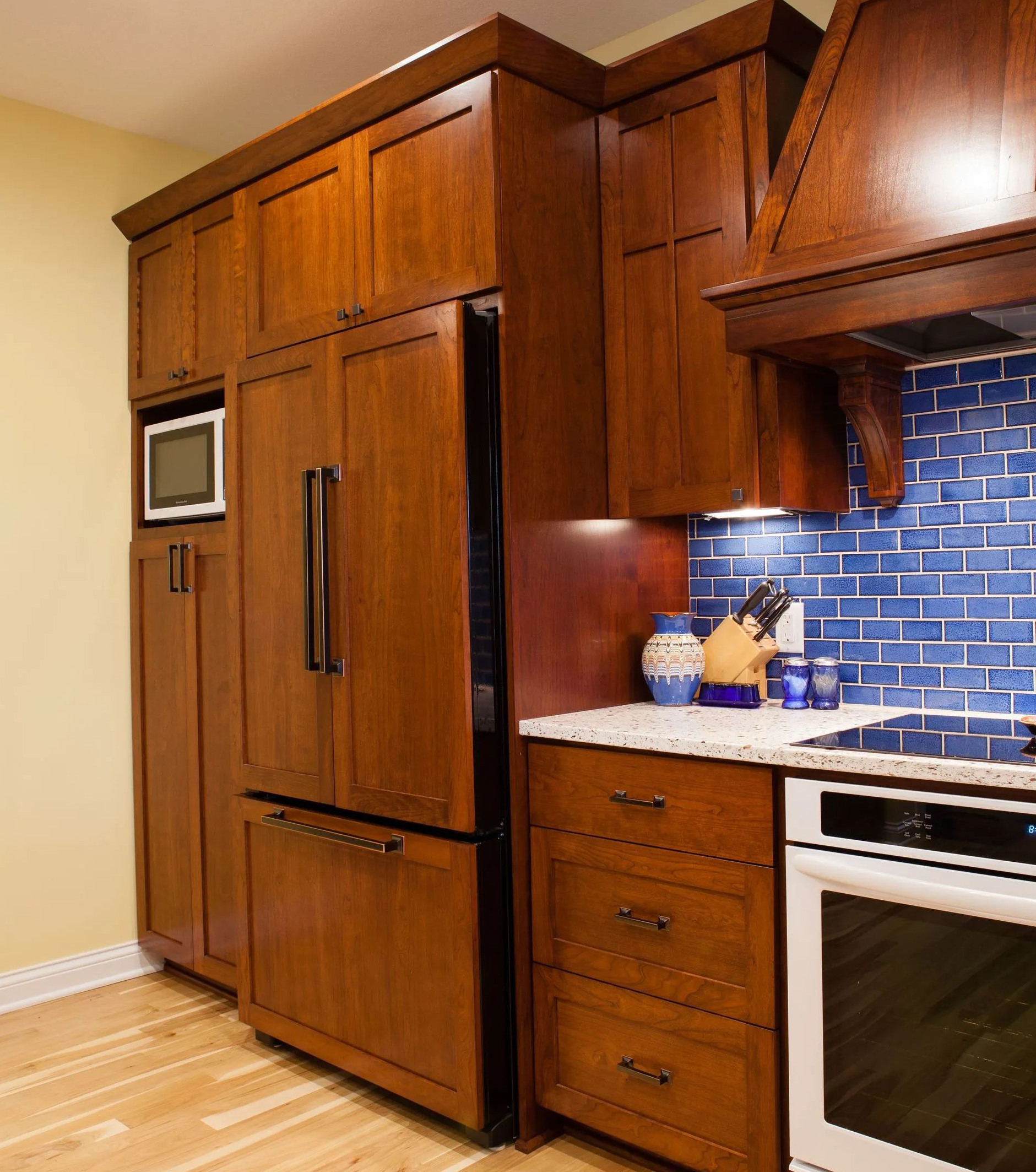
Quick Answer: If your kitchen layout already works, the condition of the cabinet boxes decides the path. Sound, square, dry boxes with doors you like the shape of are good candidates for refinishing. Sound boxes with doors you dislike point toward refacing, which keeps the boxes and swaps the doors, drawer fronts, and visible surfaces. Boxes that are water damaged, sagging, swollen, or built from weak material call for replacement, because no new finish or veneer fixes a failing structure underneath.
You stand in your kitchen and the funny thing is, it works. The sink sits under the window, the range is a short step from the prep counter, and the refrigerator door opens without hitting anything. Nobody bumps into each other during dinner. The only thing dragging the room down is the cabinetry. Maybe it is honey oak from the late eighties, maybe it is a cathedral arch door style that never quite fit the house, or maybe the finish near the handles has worn down to bare wood.
So you start wondering what the smart move is. Tearing everything out feels like a lot when the floor plan is fine. Painting feels too easy to be right. Somewhere in between sits refacing, which you have heard about but never quite understood. These three paths solve different problems, and choosing well comes down to what is going on behind the doors, not just how the doors look.
Why a Good Layout Changes the Conversation
Most full kitchen remodels start because the layout fails. Too little counter space, a dead corner, a work triangle that sends you across the room for every pot. When you have none of those problems, you are in a stronger position than most homeowners. You can keep the plumbing where it is, keep the electrical where it is, and keep the appliance openings the same size.
That freedom is what makes refinishing and refacing realistic options. Both depend on keeping the existing cabinet boxes exactly where they are. The moment you want to move the sink, add an island, or widen an opening for a larger refrigerator, the conversation shifts toward replacement, because the boxes themselves have to change. If the layout truly works and you plan to keep it for years, the real question becomes how healthy those boxes are.
Start Inside the Cabinets, Not on the Doors
Before you think about door styles or paint colors, empty the sink base and a couple of the busier lower cabinets and take a hard look. This is the same check an experienced remodeler makes on a walkthrough, and it tells you more than the outside ever will.
Look At The Sink Base Floor
This is where trouble shows up first. Swelling, soft spots, dark staining, or a floor panel that flexes when you press on it all point to past leaks. Particleboard that has absorbed water puffs up and crumbles, and it does not recover once it dries.
Check That The Boxes Are Square And Level
Open each door and see whether it hangs evenly and closes without rubbing. Gaps that taper from top to bottom can mean a hinge issue, or they can mean the box has racked out of square.
Test The Shelves And Face Frames
Sagging shelves under normal dish loads, face frames pulling away from the box, or joints that move when you push on them suggest the structure is tired.
Note What The Boxes Are Made Of
Solid wood face frames with plywood sides tend to age well. Thin particleboard with paper or vinyl skins is far less forgiving, especially after decades of humidity swings.
Tip: Use a flashlight and your fingertips along the back corners of the sink base and dishwasher side panel. Water damage often hides in the corners where you rarely look, and catching it now keeps you from putting a fresh finish on a box that is already failing.
Option One: Refinishing
Refinishing keeps everything you have, the boxes, the doors, the drawer fronts, and gives them a new surface. On painted projects that means thorough cleaning and degreasing, scuff sanding, a bonding primer, and durable cabinet grade coatings. On stained wood it can mean stripping and restaining to a new tone.
Refinishing makes the most sense when two things are true. The boxes pass the inspection above, and you actually like the shape of your doors. A simple flat panel or shaker style door takes paint beautifully and can look current for a long time. A heavily detailed raised panel door with arched tops will still read as that same door in a new color.
Keep in mind what refinishing cannot do. It does not repair cracked door panels, deep gouges, or water swelling. It does not change door style, add soft close drawers on its own, or reorganize storage. Hardware can be swapped as part of the project, but the bones stay exactly the same.
In Twin Cities homes there is one more factor. Wood moves with the seasons. In January, forced air heat can push indoor humidity very low, and solid wood door panels shrink inside their frames. Come July, they swell back. On painted doors, that movement can open thin hairline cracks at the panel joints. A skilled refinisher plans for this with the right primer and coating system and by finishing panels so the paint line does not fight the wood, but you should know it is a natural trait of wood, not a defect.
Option Two: Refacing
Refacing is the middle path. The existing boxes stay in place, but the doors and drawer fronts are replaced with new ones, and the exposed face frames and end panels are covered with a matching veneer or laminate. You end up with a new door style and a new finish without disturbing countertops, plumbing, or appliances in most cases.
This fits a very specific situation: sound boxes, a layout you love, and doors you simply do not like. If you want to go from a dated arched door to a clean shaker or slab style, refinishing will not get you there and full replacement may be more than the kitchen needs.
Refacing has limits worth respecting. It only works on boxes that are healthy, since the new surfaces are only as good as the structure under them. Veneers and some laminates can lift or bubble when exposed to steady heat and steam, so the areas beside the range and above the dishwasher deserve attention during planning. Refacing also does not fix interior problems. Worn drawer boxes, broken shelf pins, or an awkward blind corner stay the same unless you upgrade them separately.
Option Three: Replacement
Replacement means removing the old cabinets and installing new boxes, doors, and drawers. Even when you keep the exact same footprint, new cabinets open up options the other paths cannot touch. You get full extension drawers in place of deep base shelves, pull outs for trash and recycling, organizers for spices and pans, and construction that starts fresh instead of carrying old damage forward.
Replacement is the clear call when the inspection turns up structural problems. A swollen sink base, sagging boxes, face frames separating from the sides, or cabinets built from thin particleboard that has absorbed moisture over many winters will not hold a new finish or a new veneer for long. Putting money into the surface of a failing box is the most common regret we hear from homeowners who tried a shortcut first.
Warning: Do not reface or refinish over cabinets with active or past water damage until the source is fixed and the damaged panels are replaced. A slow drip under the sink or a leaking dishwasher connection will keep working on the box behind your new finish, and the problem usually surfaces again as swelling, peeling, or mold.
Replacement also makes sense if the layout works but the storage inside does not. Many older kitchens have cabinets where you get on your knees to reach the back of a lower shelf. New boxes in the same positions can turn those spaces into drawers, which changes how the kitchen feels every day without moving a single wall.
How the Rest of the Kitchen Affects Your Choice
Cabinets do not live alone. Your countertops, backsplash, and flooring all connect to them, and that connection shapes the decision.
Countertops
Refinishing and refacing usually leave the countertops in place. If you love your counters, that is a big point in their favor. If you plan to replace the counters soon anyway, the calculation changes, because new countertops are templated and set on the cabinets, and it is easier to do both at once than to protect new counters during cabinet work later.
Backsplash
Tile that runs tight to the upper cabinets can chip during replacement. With refacing and refinishing it generally stays untouched.
Flooring
In many older homes the flooring was installed around the cabinets, not under them. Replacing cabinets with a slightly different base footprint can expose unfinished subfloor, so plan the flooring at the same time if you go that route.
Matching the Option to Your Kitchen
Here is a simple way to frame the decision.
If the boxes are healthy and you like the door shape, refinishing gives you a fresh look with the least disruption.
If the boxes are healthy but the door style is what bothers you, refacing gives you a new look while keeping the structure you already have.
If the boxes show water damage, sagging, or weak construction, or if you want storage that the current boxes cannot provide, replacement is the path that holds up over time.
Your plans for the house matter too. If you are staying put for a long stretch, it is worth weighing which option will still look good and work well a decade from now, not just which one finishes fastest.
Frequently Asked Questions
How do I know if my cabinet boxes are good enough to keep?
Check the sink base for swelling or soft spots, make sure doors hang evenly and boxes are square, look for sagging shelves, and note whether the boxes are plywood or particleboard. Healthy, dry, square boxes are good candidates for refinishing or refacing.
Can I change my door style without replacing the cabinets?
Yes, that is exactly what refacing does. The boxes stay in place while the doors and drawer fronts are replaced and the exposed frames are covered to match.
Will painted cabinets crack in a Minnesota winter?
Solid wood door panels naturally shrink in dry winter air and expand in humid summers. That movement can show as fine lines at panel joints on painted doors. The right prep and coating system reduces it, and keeping indoor humidity steadier helps too.
Does refacing include new drawers and hinges?
Refacing typically includes new doors and drawer fronts, and new hinges and pulls are commonly part of the project. Drawer boxes and interior organizers are separate upgrades you can add if the old ones are worn.
Do I need new countertops if I replace my cabinets?
Not always, but removing old cabinets often damages existing countertops, especially stone that was glued and set in place. Most homeowners who replace cabinets plan new counters at the same time.
How long does each option disrupt the kitchen?
Refinishing and refacing usually take days rather than weeks, and you can often keep using parts of the kitchen. Replacement takes longer because it involves removal, installation, countertop templating, and finishing work.
Choosing the Right Path for Your Cabinets
When the layout already works, the real decision is how much of what you have is worth keeping. The answer lives inside the cabinets: a dry, square, solid box earns a second life through refinishing or refacing, while a swollen or sagging one is signaling that something new is needed. Checking the sink base, the shelves, and the face frames first makes the rest of the choice much clearer. A sound structure under any finish keeps the kitchen looking good for years.
TLC Remodeling
has worked on kitchens in Golden Valley, MN for 36+ years, and each
cabinet assessment
starts with a careful look at the boxes before any finish or door style is discussed. Explaining what the cabinets can handle, and what they cannot, lets homeowners invest only in the option that will last. With the right path chosen, the kitchen feels fresh, works just as well as before, and stays comfortable through many more Minnesota winters.