Importance of Interior Painting and Trim Work for Homes

Minnesota kitchens face a uniquely demanding environment where flooring choices are tested far beyond standard residential conditions. Between humid summers, frozen winters, and constant foot traffic from snow-covered boots, the kitchen floor becomes one of the most stressed surfaces in any home. Hardwood flooring remains a top choice for its timeless appeal and strong resale value, yet the debate between engineered hardwood and solid hardwood continues to shape remodeling decisions across the state. Understanding how each performs under real-world Minnesota conditions is essential before making a long-term investment. These environmental pressures often accelerate wear and reveal weaknesses in poorly chosen materials. As a result, selecting the right hardwood type becomes less about aesthetics alone and more about performance and resilience over time. Homeowners must also consider long-term maintenance demands alongside initial installation quality and cost.
Kitchen flooring in this region must withstand rapid seasonal moisture changes, accidental spills from daily cooking, and abrasive debris carried indoors during winter months. Solid hardwood offers natural beauty and refinishing potential, while engineered hardwood is designed with layered construction for improved dimensional stability. Both options bring distinct advantages, but their performance differs significantly when exposed to fluctuating humidity and heavy household use. Homeowners seeking durability, style, and long-term value must carefully evaluate how each material responds to Minnesota’s challenging climate conditions. This comparison provides clarity on which hardwood type stands stronger against moisture, wear, and seasonal stress in active kitchen spaces. In addition, lifestyle factors such as family size, cooking frequency, and pet activity further influence flooring performance over time. Proper installation and routine care also play a major role in extending the lifespan of either flooring choice in demanding kitchen environments.
Solid Hardwood in Minnesota Kitchens: Strengths and Limitations
Natural Appeal and Long-Term Value
Solid hardwood flooring is made from a single piece of timber, delivering timeless authenticity and strong visual appeal in Minnesota kitchens. It enhances property value while offering a warm traditional look. Its ability to be sanded and refinished multiple times extends lifespan significantly, making it a long-term investment for well-maintained residential spaces overall in Minnesota homes, especially across long-term residential kitchen installation projects today.
Vulnerability to Moisture and Humidity
Solid hardwood reacts strongly to environmental changes common in Minnesota. Humid summers can cause expansion, while dry winters lead to contraction and visible gaps between boards. Kitchen spills may seep into the surface if not cleaned quickly, causing stains or warping. This makes moisture control essential for maintaining long-term flooring performance in kitchens over time, requiring consistent monitoring and proper humidity control always.
Performance Under Winter Conditions
Winter conditions in Minnesota introduce salt, snow, and grit into kitchen areas, increasing surface abrasion risk significantly. Solid hardwood can develop scratches and dullness if protective mats and cleaning routines are not maintained. Although durable, it requires regular upkeep to preserve appearance and structural integrity in high-traffic residential kitchen environments during the winter months due to daily use, especially in busy family kitchens throughout Minnesota homes.
Engineered Hardwood in Minnesota Kitchens: Stability and Innovation
- Layered Construction for Dimensional Stability
Engineered hardwood is built using multiple layers of plywood or high-density fiberboard topped with a real wood veneer. This layered construction improves dimensional stability, helping the floor resist expansion and contraction caused by Minnesota humidity changes. It performs reliably in kitchens where temperature and moisture fluctuations occur frequently throughout seasonal cycles, consistently in residential environments, overall supporting consistent flooring performance across seasonal climate changes.
- Resistance to Spills and Seasonal Moisture
Engineered hardwood offers improved resistance to spills due to its layered core, which slows moisture absorption compared to solid hardwood. In busy kitchens, this provides extra time for cleanup before damage occurs. While not waterproof, it performs better under everyday cooking activity and seasonal moisture exposure common in Minnesota residential environments, overall consistently through daily kitchen use, making maintenance easier for busy households' daily routines.
- Compatibility with Radiant Heating and Subfloors
Engineered hardwood works well with radiant heating systems commonly used in Minnesota homes, as its structure reduces movement caused by temperature changes. It can also be installed over concrete subfloors, increasing versatility in kitchen remodeling projects. This adaptability makes it a practical choice for modern layouts requiring stable flooring performance across varied installation conditions in residential kitchens, especially in modern Minnesota home renovation projects today.
Humidity and Climate Performance Comparison
Seasonal Expansion and Contraction Behavior
Solid hardwood responds strongly to Minnesota seasonal shifts, expanding during humid summers and contracting in dry winter months. This movement often leads to visible gaps or slight surface unevenness over time. Engineered hardwood maintains better stability due to its cross-layered structure, reducing noticeable changes in flooring appearance across varying environmental conditions consistently throughout kitchen environments today, particularly in homes with fluctuating indoor humidity levels.
Moisture Exposure in Kitchen Environments
Kitchens expose flooring to frequent moisture from sinks, dishwashing, cooking spills, and daily cleaning routines. Solid hardwood requires immediate attention to prevent absorption and damage, while engineered hardwood provides slightly improved tolerance due to its stabilized core. However, extended exposure to water can still compromise both materials if not managed carefully over time consistently in kitchen use, especially during heavy cooking and cleaning routines daily.
Real-World Kitchen Scenario
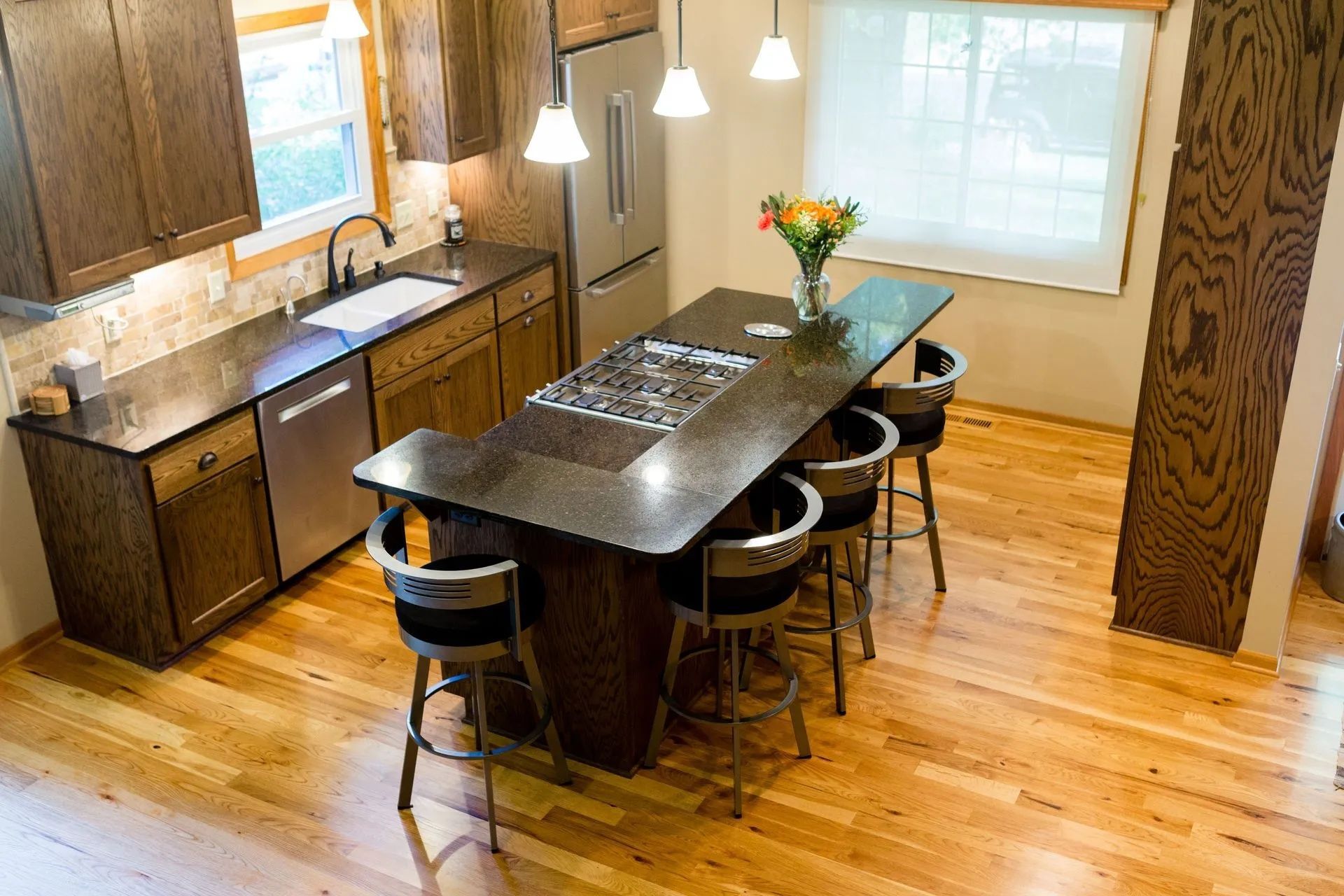
In a typical Minnesota home, kitchens face constant challenges from snow tracked indoors, active cooking routines, and everyday pet movement. Engineered hardwood maintains better visual consistency and structural stability under these conditions. Solid hardwood remains appealing but may require more frequent maintenance to address wear caused by moisture, debris, and seasonal activity cycles in residential kitchens today, reflecting typical Minnesota household lifestyle and weather conditions.
Durability Against Spills, Stains, and Winter Wear
- Spill Resistance and Maintenance Needs
Kitchen spills involving water, oil, or food can quickly impact hardwood flooring if not addressed promptly. Solid hardwood absorbs moisture faster, increasing risk of staining and surface damage. Engineered hardwood offers improved protection due to its layered structure, allowing more time for cleanup before permanent issues develop in active kitchen environments, overall during normal daily use, particularly in active family kitchen environments, year-round settings.
- Impact of Winter Boots and Debris
Minnesota winters bring salt, sand, and ice melt chemicals into kitchens through winter boots, increasing abrasive wear on hardwood surfaces. Engineered hardwood generally handles this exposure better when properly finished, reducing visible scratching and dulling. Solid hardwood may show wear more quickly without consistent maintenance, especially in high-traffic residential entry and kitchen areas throughout winter season use especially near entryways and high-traffic cooking areas daily.
- Maintenance and Longevity Considerations
Solid hardwood can last decades when properly maintained and periodically refinished, making it a strong long-term investment for homeowners. Engineered hardwood offers lower maintenance demands and stable daily performance, though refinishing options depend on veneer thickness. The choice often depends on whether long-term restoration or consistent low-maintenance durability is preferred in kitchen flooring choices, supporting informed decisions for long-term residential investment value.
Installation, Cost, and Practical Decision Factors
Installation Flexibility and Subfloor Compatibility
Engineered hardwood offers greater installation flexibility, including floating, glue-down, or nail-down methods. It can be installed over concrete subfloors, increasing usability in Minnesota homes. Solid hardwood typically requires nail-down installation over plywood, limiting applications in some kitchen remodels. This makes engineered options more adaptable for diverse residential kitchen flooring conditions and renovation requirements, overall making it suitable for diverse Minnesota housing projects.
Cost vs Value Over Time
Solid hardwood often involves a higher upfront investment but delivers long-term value through refinishing potential and property appreciation. Engineered hardwood provides a more budget-friendly entry point while offering strong performance in moisture-prone kitchen environments. The decision depends on balancing initial cost with expected usage, durability needs, and long-term maintenance planning for residential kitchen spaces overall, depending on budget priorities and long-term expectations today.
Lifestyle and Usage Considerations
Households with heavy kitchen activity, pets, or frequent gatherings may benefit more from engineered hardwood due to its stability under stress. Solid hardwood suits homes prioritizing traditional craftsmanship and long-term refinishing capability, provided moisture control is maintained. Choosing between them depends on daily usage patterns, environmental exposure, and durability expectations in kitchen flooring choices, ensuring a balance between durability, comfort, and maintenance needs.
Proven Remodeling Approaches Enhancing Kitchen Floor Durability
At TLC Remodeling, extensive experience in residential home remodeling and renovation services across Golden Valley, Minnesota, has shown how flooring choices directly impact long-term kitchen performance. With over 36+ years of hands-on expertise, deep understanding exists regarding how Minnesota’s climate affects hardwood installations in real residential settings. Kitchens are among the most demanding spaces in any home, requiring materials that balance durability, moisture resistance, and visual appeal without compromise.
Engineered hardwood is often recommended in modern kitchen remodels due to its structural stability under fluctuating humidity and temperature conditions. Solid hardwood, while highly valued for its craftsmanship and timeless appearance, requires more controlled environments and diligent upkeep to maintain performance in active kitchens. Each project is evaluated based on lifestyle needs, structural conditions, and long-term maintenance expectations to ensure the right flooring solution is implemented.
Our approach emphasizes precision installation, material integrity, and practical design solutions tailored to Minnesota homes. Every renovation is guided by a commitment to durability, functionality, and aesthetic excellence. Through decades of remodeling experience, we continue to support homeowners in making informed decisions that enhance both property value and everyday living comfort in demanding kitchen environments.