Quartz, Granite, or Solid Surface for a Busy Kitchen? How They Hold Up Day to Day
Quick Answer: For a busy kitchen, the three most common countertop choices each hold up differently. Granite is a natural stone that handles heat best and resists scratches well, but it is porous and needs periodic sealing to fend off stains. Quartz is engineered and non-porous, so it resists stains and scratches and never needs sealing, but its resin binder can be damaged by very hot pans, so it needs trivets. Solid surface is a man-made material that is non-porous, joint-free in appearance, and the only one of the three that can be sanded to erase scratches and burns, though it is the softest and least heat-resistant. The best pick depends less on which is toughest overall and more on how you actually cook and how much upkeep you want.
Your kitchen counter takes more abuse than any other surface in the house. Hot pans come straight off the stove, a knife slips, a glass of red wine tips over during dinner, the kids do homework and crafts on it, and groceries land on it in a heap. In a busy household, especially through a long Minnesota winter when everyone is cooking and gathering indoors for months, the countertop is working hard every single day. So when it is time to remodel, the question is not just which material looks best. It is which one will still look good after years of real life.
Three materials come up again and again for hardworking kitchens: quartz, granite, and solid surface. They get lumped together as durable stone-like options, but they are made differently, and they hold up differently to the things that actually happen on a counter. Knowing how each handles heat, scratches, spills, and daily wear is what lets you match the surface to the way your family really uses the kitchen. Here is how the three compare where it counts.
The Three Materials, Quickly
Before comparing how they wear, it helps to know what each one actually is, because the material explains the behavior.
Granite is natural stone, quarried in slabs and cut to fit your kitchen, so every piece is unique in pattern and color. It is very hard and has been the go-to premium counter for decades. Quartz is engineered, made from ground natural quartz bound together with resins and pigments, which makes it extremely consistent in appearance and non-porous by design. Solid surface, known by brand names like Corian, is fully man-made from acrylic or polyester materials blended into a smooth, uniform slab. That difference, natural stone versus engineered stone versus solid man-made material, is the reason each one shrugs off some kinds of abuse while being vulnerable to others.
Scratches and Everyday Wear
In a kitchen where knives, pans, and heavy dishes are in constant motion, scratch resistance matters, and this is where hardness sets the order.
Granite is the toughest of the three against scratches, being a dense natural stone that stands up to knives and daily contact without marking easily, though you should still cut on a board to protect your blades. Quartz is close behind, hard and durable enough to resist scratches from normal use, which is a big part of why it is so popular in family kitchens. Solid surface is the softest of the three and will scratch more readily under heavy use. But it has a trick the others do not: because the material is solid and uniform all the way through, scratches, and even minor burns, can be sanded out and the surface refinished to look new again. A deep scratch in granite or quartz is permanent; in solid surface, it is repairable.
Heat: The One Where They Really Differ
If you cook a lot, this is the category to pay attention to, because the gap between these materials is real. A busy kitchen sees hot pots, sheet pans, and casserole dishes moving around constantly, and not every counter can take a hot pan straight from the oven.
Granite wins here without much argument. As natural stone formed under heat, it is highly heat-resistant and can take a hot pot or pan without damage, which is why heavy cooks often favor it. Quartz is the surprise, because although it is marketed as durable, its resin binder is sensitive to high heat and a very hot pan set directly on it can scorch, discolor, or leave a mark. Quartz needs trivets and hot pads, no exceptions. Solid surface is the most heat-sensitive of the three, and direct hot cookware can damage or even melt the surface, so it also relies on trivets. The saving grace for solid surface is again that heat marks can often be sanded out, while a scorch on quartz usually cannot.
Tip: No matter which of these three you choose, build a simple habit of always landing hot cookware on a trivet or a folded towel, not straight on the counter. It costs nothing and it removes the single most common way these surfaces get permanently marked. Keep a couple of trivets within reach of the stove and the oven so reaching for one is automatic, especially in the middle of a busy dinner when you are moving fast.
Stains, Spills, and Sealing
Spills are constant in a real kitchen, coffee, wine, tomato sauce, oil, and how a surface handles them comes down to whether it is porous and whether it needs sealing.
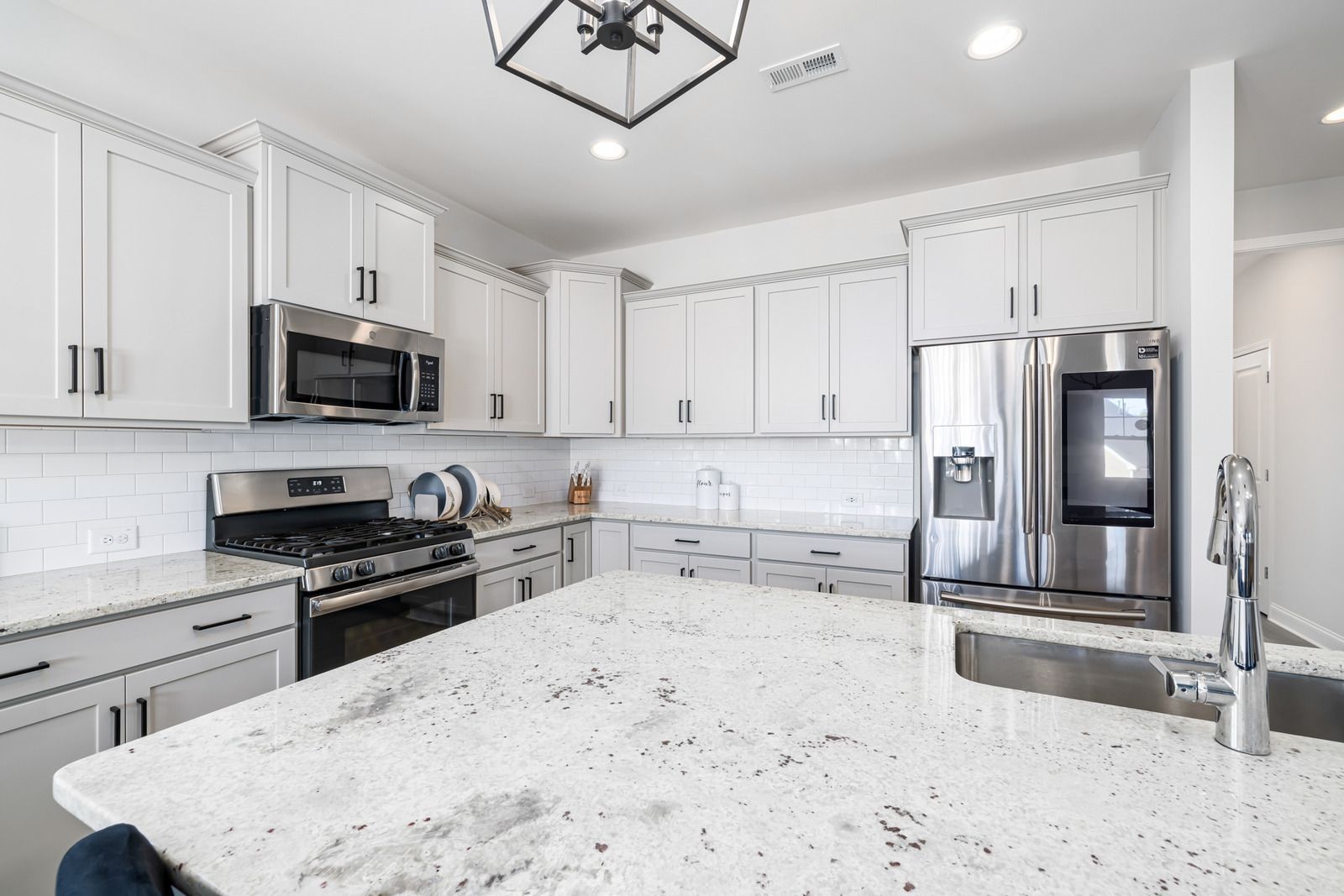
Quartz and solid surface both have an advantage here because they are non-porous. Nothing soaks in, so spills sit on top and wipe away, and neither one ever needs sealing. That is a real convenience in a kitchen where a spill might sit for a while before anyone catches it. Granite is different, because natural stone is porous, and an unsealed or poorly sealed granite top can absorb a dark spill like red wine or oil and stain. Granite needs to be sealed when it is installed and resealed periodically after that to keep its stain resistance up. It is not difficult, but it is a recurring task the other two do not ask of you. If a low-maintenance, spill-and-forget surface is the goal, the non-porous options have the edge.
Maintenance and the Long Haul
Beyond any single spill, there is the question of what living with the surface for ten or fifteen years actually asks of you, and the three diverge on upkeep.
Quartz is the lowest-maintenance of the group. It never needs sealing, and day-to-day care is just mild soap and water, with harsh chemicals and abrasive pads avoided so the finish stays even. Granite asks the most, mainly the periodic resealing, plus wiping up spills promptly between sealings. Solid surface sits in an interesting spot: it needs no sealing and cleans easily, and its repairability means that years of accumulated scratches or a scorch can be refinished back to a fresh look rather than lived with or replaced. In a hardworking kitchen that will see a lot of wear, that ability to renew the surface is worth weighing against solid surface being softer in the first place.
Warning: Do not treat quartz or solid surface as heatproof just because they are sold as durable and stain-resistant. Both can be permanently scorched or, in the case of solid surface, even melted by a pan straight off a hot burner, and heat damage is not what their stain resistance protects against. Confusing stain resistance with heat resistance is one of the most common ways homeowners ruin an otherwise tough new counter in the first month.
Matching the Material to How You Actually Cook
The honest answer to which is best is that it depends on your kitchen and your habits, because none of the three wins every category. The right choice comes from being clear-eyed about how you cook and what upkeep you will actually keep up with.
If you are a heavy cook who is always moving hot pans and wants the most forgiving surface for heat and scratches, granite earns its keep, as long as you are willing to reseal it now and then. If you want the lowest maintenance and a consistent, no-sealing surface that resists stains and everyday scratches, quartz is hard to beat, provided you commit to trivets. If you value a smooth, joint-free look, easy cleaning, and the ability to refinish away years of wear, and you are willing to be careful with heat, solid surface offers something the other two cannot with its repairability. There is no wrong answer, only the one that fits the way your family lives in the kitchen. Seeing and touching real samples, and talking through your cooking habits with someone who installs all three, is the surest way to land on the surface you will be happy with for years.
Frequently Asked Questions
Which countertop is the most durable overall for a busy family kitchen?
There is no single winner, because durability has several parts. Granite is the most heat- and scratch-resistant but needs sealing, quartz resists stains and scratches and needs no sealing but is vulnerable to heat, and solid surface is the softest but can be refinished when it wears. The most durable choice for you depends on which kind of abuse your kitchen dishes out most.
Do I really need to use trivets on quartz?
Yes. Quartz is bound together with resins that can scorch or discolor under high heat, so a hot pan set directly on the surface can leave a permanent mark. Trivets and hot pads are essential with quartz. This is the one area where quartz is less forgiving than natural granite.
How often does granite need to be sealed?
Granite should be sealed at installation and resealed periodically after that, with the exact interval depending on the specific stone and how heavily the counter is used. It is a quick task, but it is an ongoing one that quartz and solid surface do not require. Keeping up with it is what preserves granite's stain resistance.
Can scratches really be removed from solid surface countertops?
Yes, and it is one of solid surface's biggest advantages. Because the material is the same all the way through, scratches and minor burns can be sanded out and the surface refinished to look new. Granite and quartz cannot be repaired this way, so damage on those is usually permanent.
Is quartz or granite better for stains?
Quartz has the edge on stains because it is non-porous and nothing soaks in, so it never needs sealing. Granite is porous and can absorb a dark spill if its sealer has worn thin, though proper sealing keeps it well protected. For a spill-and-wipe surface with no upkeep, quartz is the simpler option.
Which is easiest to keep clean day to day?
Quartz and solid surface are both very easy, since their non-porous surfaces wipe clean with mild soap and water and neither needs sealing. Granite is also easy to wipe down but adds the periodic sealing task. For pure day-to-day simplicity, the two non-porous options are slightly ahead.
Choosing a Counter That Can Keep Up
A busy kitchen counter is not the place to guess. Granite gives you the best heat and scratch resistance in exchange for periodic sealing, quartz gives you low-maintenance, no-seal stain resistance in exchange for being careful with heat, and solid surface gives you a smooth, refinishable surface with no visible joints in exchange for being the softest of the three. Each is a strong choice in the right kitchen, and the wrong one is usually just a mismatch between the material and how the household actually cooks and cleans. Get clear on your habits first, then pick the surface built for them, and your counter will still be pulling its weight long after the remodel is done.
Pick the countertop that fits how your kitchen really gets used — Choosing between quartz, granite, and solid surface is far easier when you can see the samples in your space and talk through your cooking habits with someone who installs all three every week. With 36
years of experience helping homeowners in Golden Valley, Minnesota, and the surrounding Twin Cities region, TLC Remodeling
walks homeowners through the trade-offs in heat, scratches, stains, and upkeep, helps you match the material to your family's kitchen, and handles precise measurement and installation for a finished surface built to last. Reach out today to set up a countertop consultation and start your kitchen remodel with the right surface picked for the way you live.
Refinish or Replace? The Real Difference Between Tired Kitchen Cabinets and Failing Kitchen Cabinets